




Analysis of the 2025 data demonstrates that, while specific readiness and infrastructural components related to Artificial Intelligence and Large Language Model technology are emerging strongly, the functional deployment of these capabilities is not yet ubiquitous across Scottish health and social care. Because AI has the potential to make operations significantly more efficient across many use cases simultaneously — rather than being limited to a single task or process — the degree of leadership attention it is receiving is understandable. This broad applicability also fuels the development of tools and frameworks aimed at managing the risks of AI use, including identification regulations, ethical frameworks, and collaborative registers of applications and their outcomes.
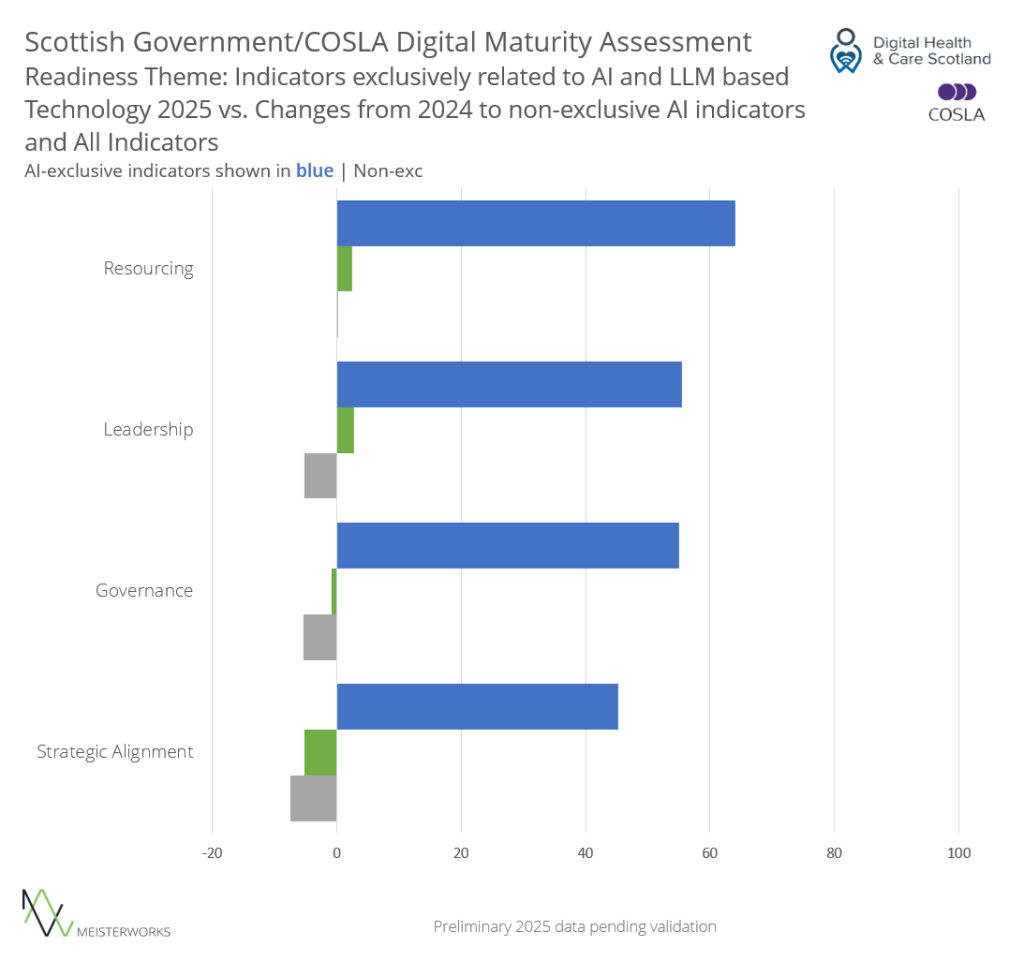
Analysis of the Readiness theme highlights a significant contrast between AI-specific momentum and general organisational trends. Indicators exclusively related to AI and Large Language Models within Resourcing, Leadership, Governance, and Strategic Alignment maintain strong scores ranging between 45 and 64 out of 100. Crucially, this focus is occurring even as broader, non-exclusive indicators within several of these exact same management categories — specifically Governance and Strategic Alignment — have recorded observable score declines since 2024.
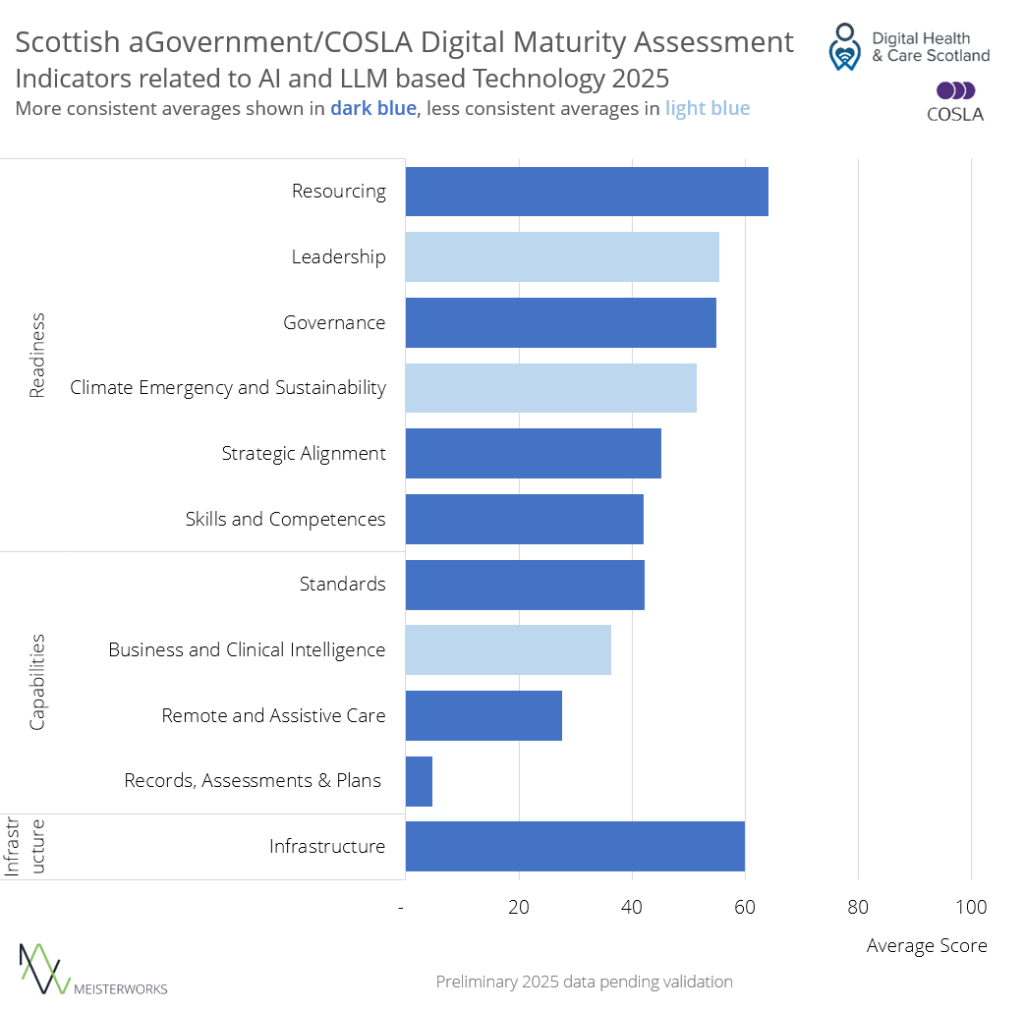
Health and social care providers should devote strategic decision-making resources to regularly assessing which specific organisational challenges may find efficient solutions from AI and Large Language Model technology, the appropriate share of leadership attention these technologies should receive at this stage, and the extent to which the organisation has the necessary structured, good-quality data and infrastructure to derive genuine benefit from AI solutions when functional deployment accelerates.
 Contact Author